
Industrial pellet procurement is rarely won by the supplier that replies first with a price. It is usually won by the supplier that understands the plant's actual fuel pattern, technical tolerances, and shipment rhythm before the quote is finalized.
For biomass boilers and larger industrial users, the most useful first questions are straightforward: what fuel system is in use, what performance range matters most, what monthly or quarterly volume is expected, and which destination port is being planned. When those four points are clear, the commercial conversation becomes much more accurate.
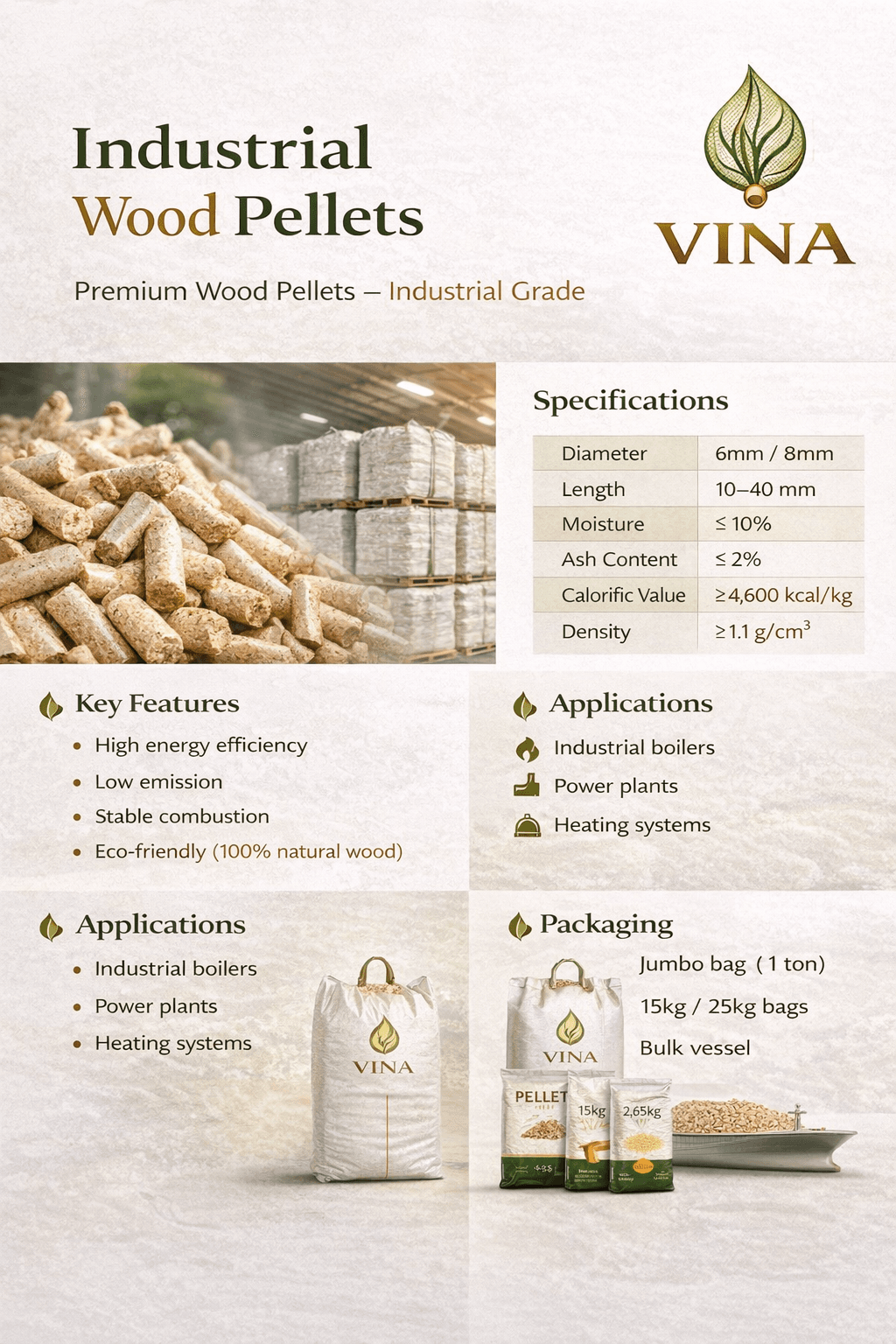
This is also why the updated industrial wood pellet product card now uses the real catalogue asset and clearer specification language. It helps buyers distinguish between a product meant for industrial handling and a product framed for retail or heating distribution.
From the supplier side, industrial programs also depend on documentation discipline. Even when the buyer does not require every document up front, it is valuable to know whether test reports, loading references, or sustainability documentation will be needed before the first shipment window.
A good industrial RFQ is therefore not only a price request. It is a planning request that combines technical fit, container or bulk logic, incoterm expectations, and a believable delivery rhythm.
“When the buyer shares fuel use and destination logic early, the quotation becomes sharper and the execution risk drops immediately.”
Commercial planning note, VINA WoodPellet